Spaghetti Carbonara

Serving Size: 4 Portions | Ready In: 30 min

This dish is a deli bacon-egg-and-cheese-on-a-roll that has been pasta-fied, fancified, fetishized and turned into an Italian tradition that, like many inviolate Italian traditions, is actually far less old than the Mayflower. Because America may have contributed to its creation, carbonara is Exhibit A in the back-and-forth between Italy and the United States when it comes to food. Remember: the main goal is creaminess.
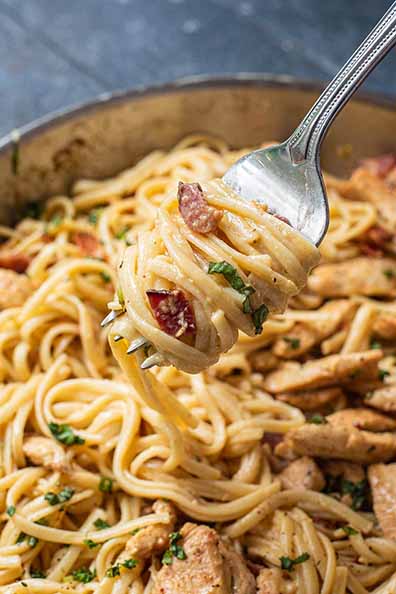
Bacon Boil Cheese Dinner Easy Egg Five Ingredient Italian Main Course Pancetta Pastas Quick Saute Spaghetti
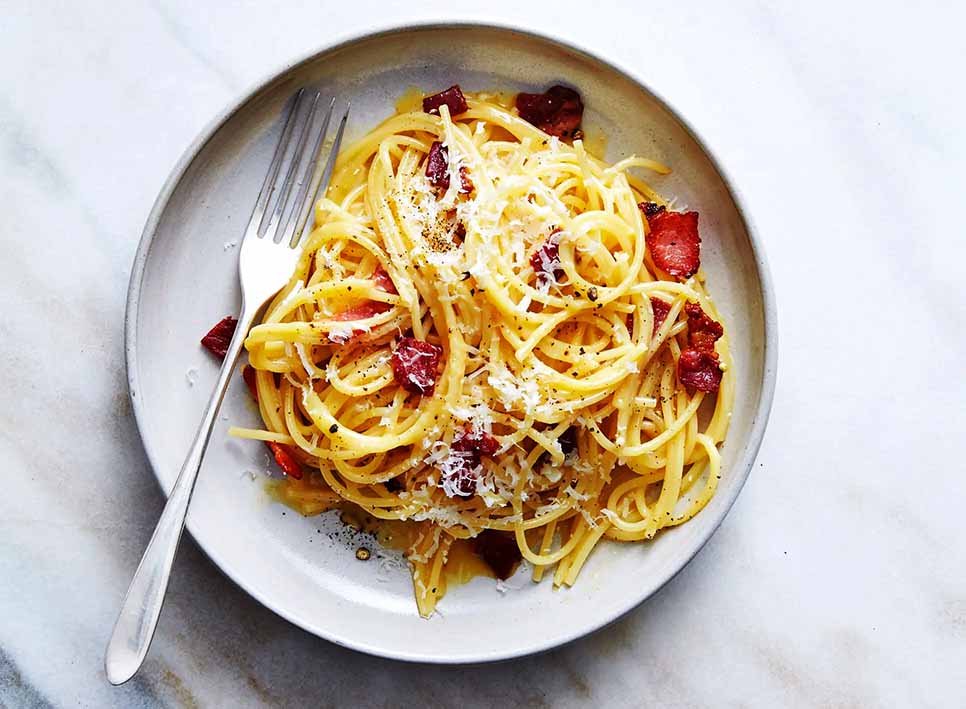
Spaghetti Carbonara on a plate

Ingredients

Instructions

  1. Place a large pot of lightly salted water (no more than 1 tablespoon salt) over high heat, and bring to a boil. Fill a large bowl with hot water (to warm the bowl for serving), and set aside.
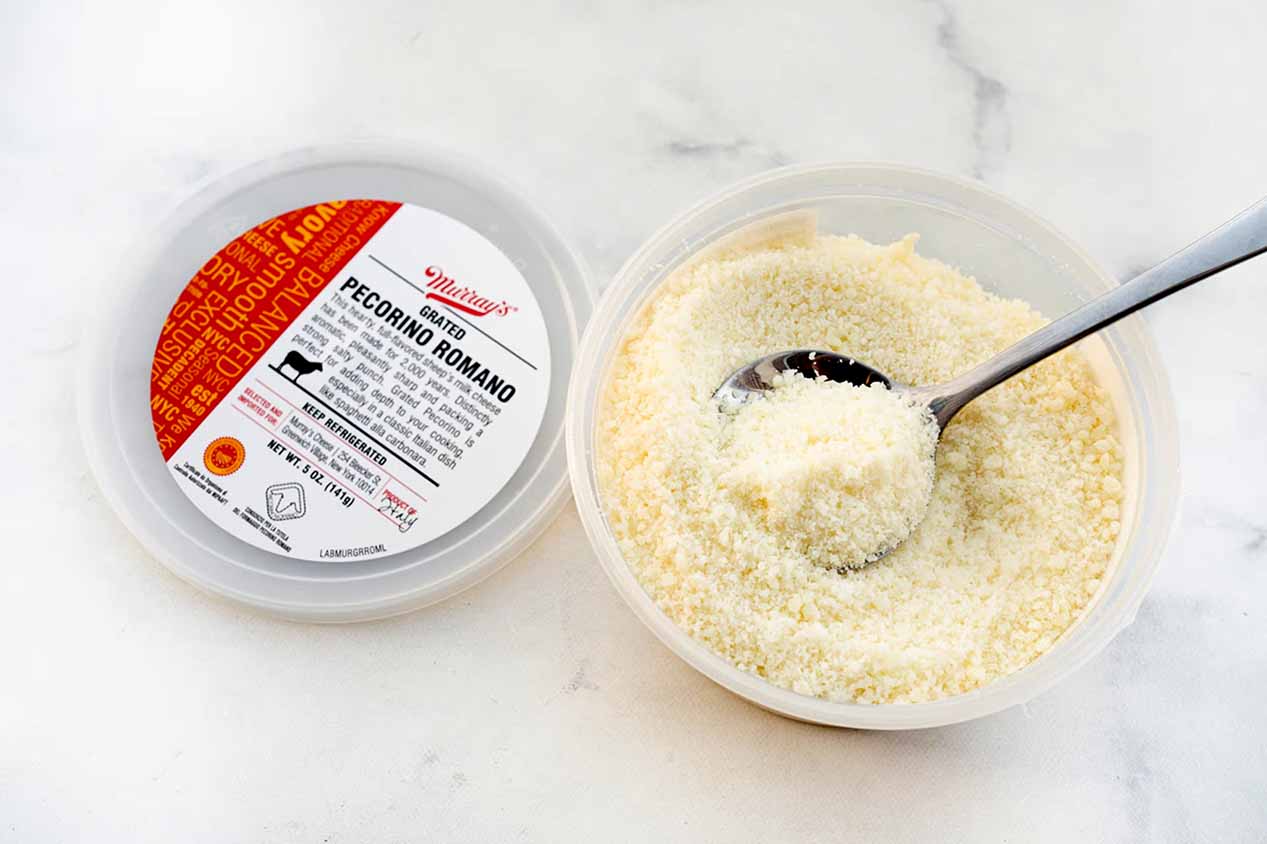
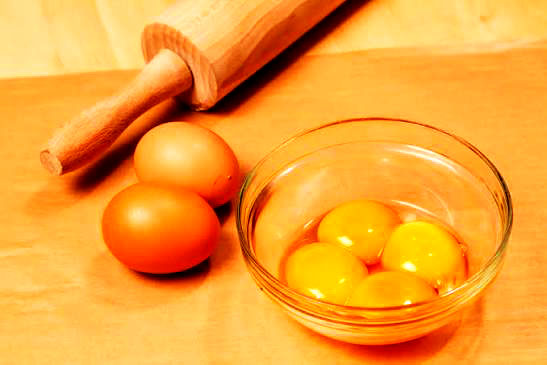
  2. In a mixing bowl, whisk together the eggs, yolks and pecorino and Parmesan. Season with a pinch of salt and generous black pepper.
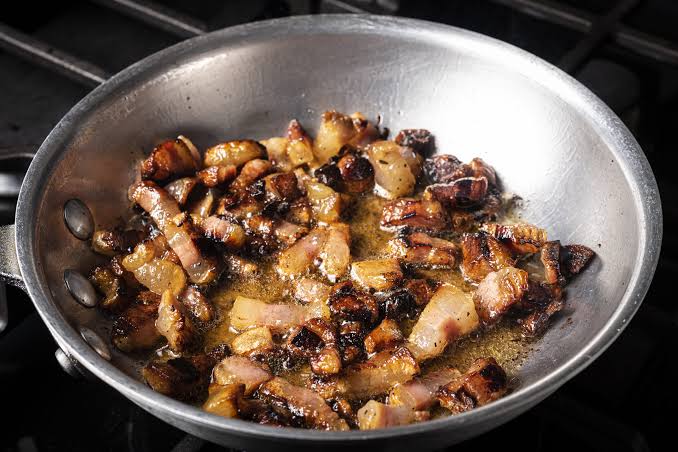
  3. Set the water to boil. Meanwhile, heat oil in a large skillet over medium heat, add the pork, and sauté until the fat just renders, on the edge of crispness but not hard. Remove from heat and set aside.
  4. Add pasta to the water and boil until a bit firmer than al dente. Just before pasta is ready, reheat guanciale in skillet, if needed. Reserve 1 cup of pasta water, then drain pasta and add to the skillet over low heat. Stir for a minute or so.
  5. Empty serving bowl of hot water. Dry it and add hot pasta mixture. Stir in cheese mixture, adding some reserved pasta water if needed for creaminess. Serve immediately, dressing it with a bit of additional grated pecorino and pepper.

Reheating Instructions

This is a dish that is best enjoyed as soon as it is made, when its sauce is at its satiny best. After the sauce sits, it can thicken and clump. If you’d like to reheat it, you can moisten it with a little bit of water or heavy cream before reheating.

FAQ

Why does the temperature matter so much for spaghetti carbonara?

If cold eggs are added to hot pasta, they can overheat and scramble, breaking into small pieces, rather than emulsifying and creating a creamy sauce. It is important to use room temperature eggs and to remove the pasta from the heat before stirring with the sauce in order for the sauce to turn creamy rather than curdled. (Some recipes use a splash of heavy cream as well, which helps ensure a silky sauce.)